Traditional Cultural Experience Programs Held Three Times a Year at Tea Master Lee Han-young’s Birthplace and Baegundong Villa
The Lee Han-young Traditional Tea Culture Center, led by Director Lee Hyun-jung, secured funding from Mokpo National University, headed by President Park Min-seo, to implement an inclusive educational program in which students with and without disabilities could build relationships with their peers and develop problem-solving skills through cooperation and shared experiences of traditional Korean culture.
The program, scheduled to take place three times during the year as part of Mokpo National University's National University Development Project, involves students from Deoksu School (Principal Lee Myeong-ok), Sorim School (Principal Kim Si-young), and Cheongram Middle School (Principal Seon Myeong-wan).
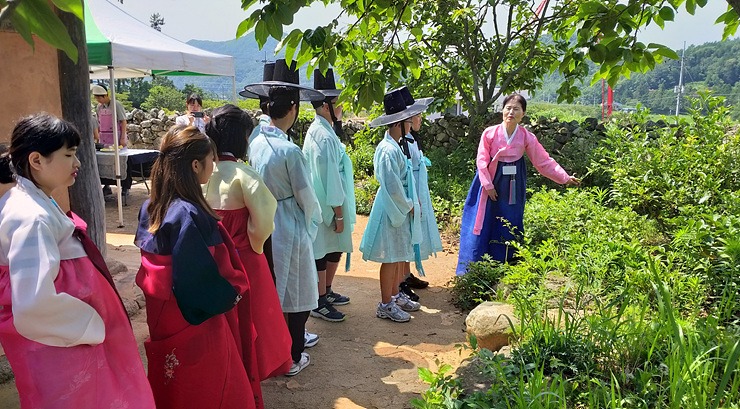
On the 11th and 25th of the previous month, students from Deoksu School and Cheongram Middle School visited the birthplace of Lee Han-young and the Baegundong Villa Garden in Gangjin, a historic center of Korean tea culture, where they participated in traditional cultural activities centered on tea.
The program featured a variety of hands-on experiences, including "Wearing Hanbok and Enjoying a Joseon-Era Garden Tea Party," "Making Traditional Tea Cakes Inspired by Dasan and Choui," "Making Hwajeon (Traditional Korean Flower Pancakes)," and "Exploring the Twelve Scenic Views of Baegundong Villa Garden."
Professor Ma Seung-jin of Mokpo National University, Director of the Namdo Traditional Culture Industrialization Research Institute, commented:
"Watching students with and without disabilities work together in pairs and groups, helping one another while experiencing traditional culture, provided a meaningful opportunity to foster a sense of community rooted in respect and healing. It also contributed to promoting a culture of inclusion and diversity."
Seon Myeong-wan, Principal of Cheongram Middle School, stated:
"This program holds particular significance as an inclusive curriculum connecting a public alternative school and a private special education school through traditional Korean tea culture. I believe these activities have provided a new and meaningful opportunity for students not only to communicate, understand, and complement one another, but also to grow together. Above all, it was wonderful to see how much the students enjoyed the experience."
Meanwhile, the Lee Han-young Traditional Tea Culture Center preserves and manages the birthplace of tea master Lee Han-young while continuing the traditions of Geumneung Wolsan Tea, which embodies a promise upheld by the Dasin Society for more than a century, and Baegun Okpan Tea, which helped preserve the identity of Korean tea culture during the Japanese colonial period.
The center also operates a variety of traditional cultural education programs, striving to strengthen the foundations of Gangjin's tea culture while expanding its reach and cultural significance.



Traditional Cultural Experience Programs Held Three Times a Year at Tea Master Lee Han-young’s Birthplace and Baegundong Villa
The Lee Han-young Traditional Tea Culture Center, led by Director Lee Hyun-jung, secured funding from Mokpo National University, headed by President Park Min-seo, to implement an inclusive educational program in which students with and without disabilities could build relationships with their peers and develop problem-solving skills through cooperation and shared experiences of traditional Korean culture.
The program, scheduled to take place three times during the year as part of Mokpo National University's National University Development Project, involves students from Deoksu School (Principal Lee Myeong-ok), Sorim School (Principal Kim Si-young), and Cheongram Middle School (Principal Seon Myeong-wan).
On the 11th and 25th of the previous month, students from Deoksu School and Cheongram Middle School visited the birthplace of Lee Han-young and the Baegundong Villa Garden in Gangjin, a historic center of Korean tea culture, where they participated in traditional cultural activities centered on tea.
The program featured a variety of hands-on experiences, including "Wearing Hanbok and Enjoying a Joseon-Era Garden Tea Party," "Making Traditional Tea Cakes Inspired by Dasan and Choui," "Making Hwajeon (Traditional Korean Flower Pancakes)," and "Exploring the Twelve Scenic Views of Baegundong Villa Garden."
Professor Ma Seung-jin of Mokpo National University, Director of the Namdo Traditional Culture Industrialization Research Institute, commented:
"Watching students with and without disabilities work together in pairs and groups, helping one another while experiencing traditional culture, provided a meaningful opportunity to foster a sense of community rooted in respect and healing. It also contributed to promoting a culture of inclusion and diversity."
Seon Myeong-wan, Principal of Cheongram Middle School, stated:
"This program holds particular significance as an inclusive curriculum connecting a public alternative school and a private special education school through traditional Korean tea culture. I believe these activities have provided a new and meaningful opportunity for students not only to communicate, understand, and complement one another, but also to grow together. Above all, it was wonderful to see how much the students enjoyed the experience."
Meanwhile, the Lee Han-young Traditional Tea Culture Center preserves and manages the birthplace of tea master Lee Han-young while continuing the traditions of Geumneung Wolsan Tea, which embodies a promise upheld by the Dasin Society for more than a century, and Baegun Okpan Tea, which helped preserve the identity of Korean tea culture during the Japanese colonial period.
The center also operates a variety of traditional cultural education programs, striving to strengthen the foundations of Gangjin's tea culture while expanding its reach and cultural significance.