A City of Jade-Green Elegance, Reminiscent of Goryeo Celadon
Find Peace and Comfort Along the Hydrangea Path of Boeunsan Mountain
Experience Hearty Local Cuisine and Warm Hospitality at Dalbit Hanok Village
Lee Han-young’s Birthplace, Preserving the Legacy of Korean Tea History and Culture
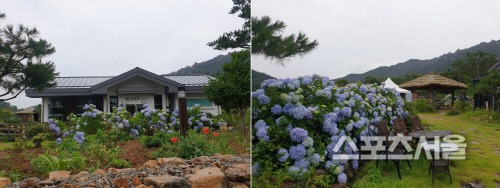
A View of Lee Han-young’s Birthplace.
Photo by Reporter Yang Mi-jung (certain@sportsseoul.com)
◇Lee Han-young’s Birthplace: Preserving the History of Baegun Okpan Tea, Korea’s First Green Tea Brand
Nestled at the foot of Wolchulsan Mountain is the birthplace of Lee Han-young, a historic site that preserves the legacy of Korea’s traditional tea culture.
Lee Han-young was a descendant of Lee Si-heon, the youngest disciple associated with the Dasin Society, a group formed by the disciples of Jeong Yak-yong (Dasan) to uphold their bond of trust and loyalty to their teacher.
Beginning in the 1890s, Lee Han-young introduced Baegun Okpan Tea, recognized as Korea’s first commercially branded green tea.
Baegun Okpan Tea is produced using tea leaves individually handpicked from wild tea plants, resulting in a very limited harvest.
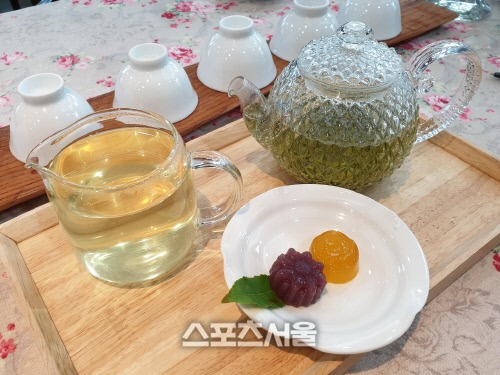
Baegun Okpan Tea.
Photo by Reporter Yang Mi-jung (certain\@sportsseoul.com)
Baegun Okpan Tea is currently preserved and managed by Lee Hyun-jung, Director of the Lee Han-young Traditional Tea Culture Center and a descendant of Lee Si-heon and Lee Han-young.
At "The Story of Baegun Okpan Tea," a tea experience space operated directly by the center, visitors can taste Baegun Okpan Tea while exploring its rich history and cultural heritage.
Director Lee Hyun-jung explained:
"It is said that the disciples of the Dasin Society sent Geumneung Wolsan Tea, harvested from Wolchulsan Mountain, to their teacher Dasan every year after he returned home from exile.
The traditional tea-making methods of Jeong Yak-yong (Dasan) have been passed down through our family for generations, and we continue to produce tea using the same techniques to this day.
During the Japanese colonial period, Korean tea was at one point misrepresented as Japanese tea. To raise awareness of Korea's own tea heritage and establish the identity of Korean tea, our family created Baegun Okpan Tea, Korea's first tea trademark, and developed a distinctive packaging method to commercialize the product.
The floral motif on the reverse side of the packaging was designed to resemble the Korean Peninsula, symbolizing the hope for Korea's independence."
Source: Sports Seoul
Original Article: http://www.sportsseoul.com/news/read/935451




A City of Jade-Green Elegance, Reminiscent of Goryeo Celadon
Find Peace and Comfort Along the Hydrangea Path of Boeunsan Mountain
Experience Hearty Local Cuisine and Warm Hospitality at Dalbit Hanok Village
Lee Han-young’s Birthplace, Preserving the Legacy of Korean Tea History and Culture
A View of Lee Han-young’s Birthplace.
Photo by Reporter Yang Mi-jung (certain@sportsseoul.com)
◇Lee Han-young’s Birthplace: Preserving the History of Baegun Okpan Tea, Korea’s First Green Tea Brand
Nestled at the foot of Wolchulsan Mountain is the birthplace of Lee Han-young, a historic site that preserves the legacy of Korea’s traditional tea culture.
Lee Han-young was a descendant of Lee Si-heon, the youngest disciple associated with the Dasin Society, a group formed by the disciples of Jeong Yak-yong (Dasan) to uphold their bond of trust and loyalty to their teacher.
Beginning in the 1890s, Lee Han-young introduced Baegun Okpan Tea, recognized as Korea’s first commercially branded green tea.
Baegun Okpan Tea is produced using tea leaves individually handpicked from wild tea plants, resulting in a very limited harvest.
Baegun Okpan Tea.
Photo by Reporter Yang Mi-jung (certain\@sportsseoul.com)
Baegun Okpan Tea is currently preserved and managed by Lee Hyun-jung, Director of the Lee Han-young Traditional Tea Culture Center and a descendant of Lee Si-heon and Lee Han-young.
At "The Story of Baegun Okpan Tea," a tea experience space operated directly by the center, visitors can taste Baegun Okpan Tea while exploring its rich history and cultural heritage.
Director Lee Hyun-jung explained:
"It is said that the disciples of the Dasin Society sent Geumneung Wolsan Tea, harvested from Wolchulsan Mountain, to their teacher Dasan every year after he returned home from exile.
The traditional tea-making methods of Jeong Yak-yong (Dasan) have been passed down through our family for generations, and we continue to produce tea using the same techniques to this day.
During the Japanese colonial period, Korean tea was at one point misrepresented as Japanese tea. To raise awareness of Korea's own tea heritage and establish the identity of Korean tea, our family created Baegun Okpan Tea, Korea's first tea trademark, and developed a distinctive packaging method to commercialize the product.
The floral motif on the reverse side of the packaging was designed to resemble the Korean Peninsula, symbolizing the hope for Korea's independence."
Source: Sports Seoul
Original Article: http://www.sportsseoul.com/news/read/935451