[An Inspiring Journey with a Travel Writer]
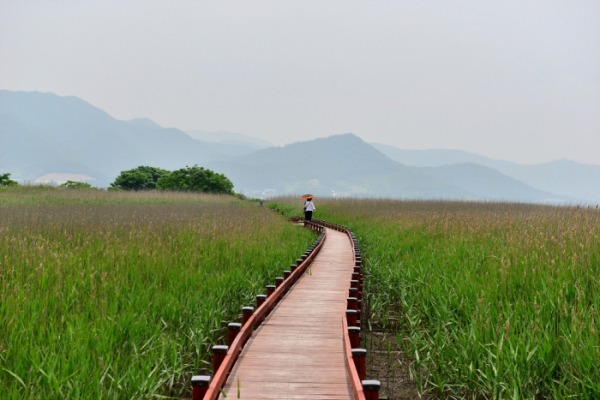
Photo by Hwang Jeong-hee, Senior Reporter
Gangjin is the first destination in the southern region featured in My Cultural Heritage Exploration, the bestselling travelogue by Yu Hong-june.
Often described as a land of exile, Gangjin is a place of timeless charm, rich cultural heritage, and exceptional cuisine, reflecting the distinctive flavors and traditions of Korea's southern region.
Embarking on a journey through southern Korea in search of beautiful landscapes and delicious local food, we immerse ourselves in the natural beauty of Gangjin, located near the southern tip of Jeollanam-do.
For those seeking an immediate escape from the bustle of city life, Baegundong Villa Garden in Gangjin offers a truly refreshing experience.
Not to be confused with Baegundong Seowon, one of Korea's earliest Confucian academies, Baegundong is a traditional private garden celebrated for its natural beauty and historical significance.
Together with Soswaewon Garden in Damyang and Buyongdong Garden in Wando, it is recognized as one of the Three Great Gardens of the Honam Region.
A byeolseo garden refers to a private retreat established by scholars or officials who withdrew from public service to live in harmony with nature, often in the countryside or deep within the mountains.
True to this tradition, Baegundong Villa Garden feels like a hidden paradise nestled among the mountains.
As one of the best-preserved examples of a traditional Honam-style retreat garden, it offers a peaceful and intimate atmosphere, surrounded by towering camellia trees and gently flowing streams.
The soft breeze passing through groves of towering bamboo, together with the serene energy of Wolchulsan Mountain, brings a sense of clarity, tranquility, and renewal to the mind.
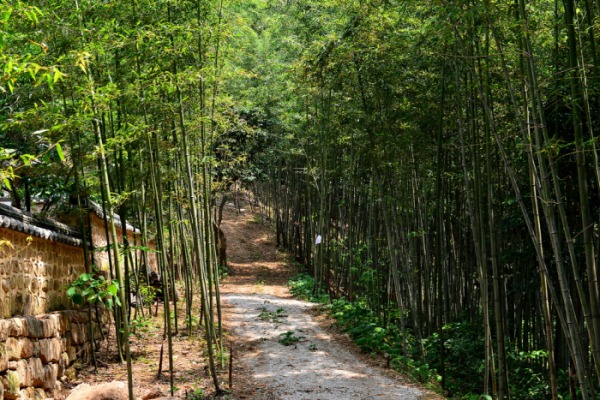
Photo by Hwang Jeong-hee, Senior Reporter
Baegundong Villa Garden began attracting wider public attention largely through its connection with Dasan Jeong Yak-yong.
During his years in exile, Dasan climbed Wolchulsan Mountain with his disciples and subsequently spent a night at Baegundong Garden.
This visit was made possible because one of Dasan's disciples was a sixth-generation descendant of Lee Dam-ro, who was closely associated with the garden's history.
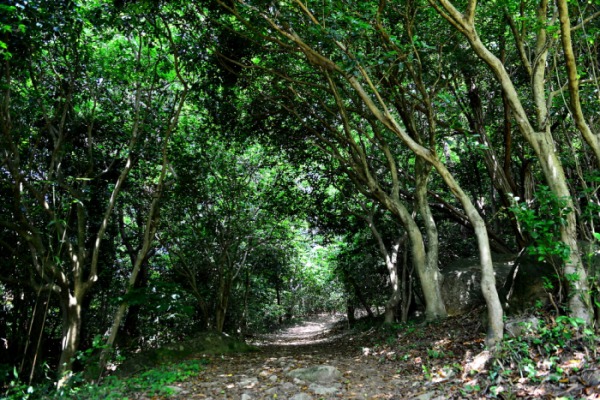
Photo by Hwang Jeong-hee, Senior Reporter
After spending a day at Baegundong Garden, Dasan became deeply captivated by its natural beauty.
He selected the “Twelve Scenic Views of Baegundong” and commissioned one of his disciples, Venerable Choui, to illustrate them. These paintings, together with Dasan's poems, were compiled into a collection known as Baeguncheop.
As visitors explore the garden today, they can discover signboards throughout the grounds featuring Dasan's descriptions and poems celebrating the garden's twelve scenic views.
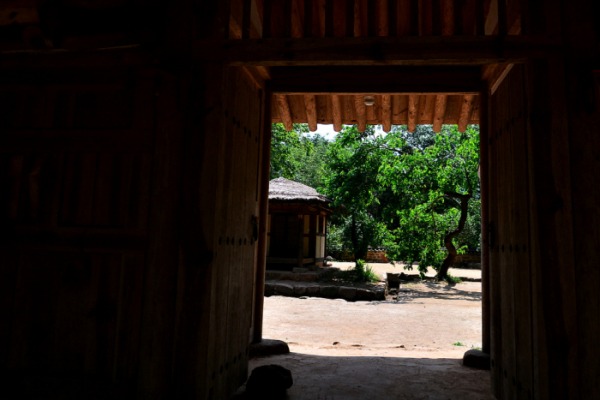
Photo by Hwang Jeong-hee, Senior Reporter
Baegundong Garden is renowned not only for its serene beauty and traditional landscape but also as a historic tea-producing region.
Baegun Okpan Tea, whose name means “Tea from Okpanbong Peak in Baegundong,” was traditionally produced from tea plants growing naturally among the towering bamboo groves of Baegundong Garden.
It is believed that Dasan's decision to invite Venerable Choui, a renowned master of Korean tea culture, to illustrate Baegundong Garden reflected more than his admiration for its scenery. It may also have expressed his desire to share the distinctive flavor and cultural significance of the tea cultivated in this remarkable place.
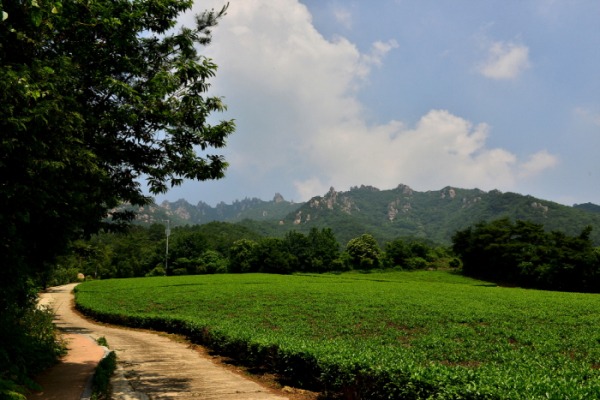
Photo by Hwang Jeong-hee, Senior Reporter
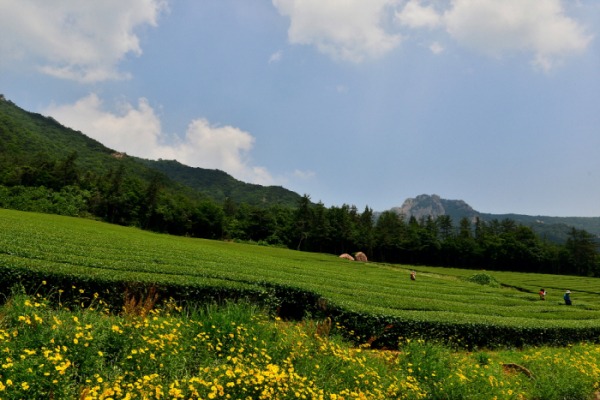
Photo by Hwang Jeong-hee, Senior Reporter
As if to demonstrate the region's reputation for producing exceptional tea, vast green tea plantations stretch across the nearby foothills of Wolchulsan Mountain.
Leaving Baegundong Garden, visitors can follow a narrow woodland path leading toward the tea fields.
The breathtaking scenery of Wolchulsan Mountain, with its majestic rocky peaks rising above the lush green tea plantations, creates a truly spectacular landscape.
Tea cultivated in regions with significant temperature differences between day and night and frequent mist is known for its reduced astringency and rich, distinctive aroma.
Continuing the prestigious legacy of Baegun Okpan Tea, high-quality tea leaves thrive on the slopes of Wolchulsan Mountain, nourished by the region's unique natural environment and the serene energy of the surrounding landscape.
Source: Bravo My Life (EToday)
Original Article: http://bravo.etoday.co.kr/view/atc_view.php?varAtcId=11215




[An Inspiring Journey with a Travel Writer]
Photo by Hwang Jeong-hee, Senior Reporter
Gangjin is the first destination in the southern region featured in My Cultural Heritage Exploration, the bestselling travelogue by Yu Hong-june.
Often described as a land of exile, Gangjin is a place of timeless charm, rich cultural heritage, and exceptional cuisine, reflecting the distinctive flavors and traditions of Korea's southern region.
Embarking on a journey through southern Korea in search of beautiful landscapes and delicious local food, we immerse ourselves in the natural beauty of Gangjin, located near the southern tip of Jeollanam-do.
For those seeking an immediate escape from the bustle of city life, Baegundong Villa Garden in Gangjin offers a truly refreshing experience.
Not to be confused with Baegundong Seowon, one of Korea's earliest Confucian academies, Baegundong is a traditional private garden celebrated for its natural beauty and historical significance.
Together with Soswaewon Garden in Damyang and Buyongdong Garden in Wando, it is recognized as one of the Three Great Gardens of the Honam Region.
A byeolseo garden refers to a private retreat established by scholars or officials who withdrew from public service to live in harmony with nature, often in the countryside or deep within the mountains.
True to this tradition, Baegundong Villa Garden feels like a hidden paradise nestled among the mountains.
As one of the best-preserved examples of a traditional Honam-style retreat garden, it offers a peaceful and intimate atmosphere, surrounded by towering camellia trees and gently flowing streams.
The soft breeze passing through groves of towering bamboo, together with the serene energy of Wolchulsan Mountain, brings a sense of clarity, tranquility, and renewal to the mind.
Baegundong Villa Garden began attracting wider public attention largely through its connection with Dasan Jeong Yak-yong.
During his years in exile, Dasan climbed Wolchulsan Mountain with his disciples and subsequently spent a night at Baegundong Garden.
This visit was made possible because one of Dasan's disciples was a sixth-generation descendant of Lee Dam-ro, who was closely associated with the garden's history.
After spending a day at Baegundong Garden, Dasan became deeply captivated by its natural beauty.
He selected the “Twelve Scenic Views of Baegundong” and commissioned one of his disciples, Venerable Choui, to illustrate them. These paintings, together with Dasan's poems, were compiled into a collection known as Baeguncheop.
As visitors explore the garden today, they can discover signboards throughout the grounds featuring Dasan's descriptions and poems celebrating the garden's twelve scenic views.
Baegundong Garden is renowned not only for its serene beauty and traditional landscape but also as a historic tea-producing region.
Baegun Okpan Tea, whose name means “Tea from Okpanbong Peak in Baegundong,” was traditionally produced from tea plants growing naturally among the towering bamboo groves of Baegundong Garden.
It is believed that Dasan's decision to invite Venerable Choui, a renowned master of Korean tea culture, to illustrate Baegundong Garden reflected more than his admiration for its scenery. It may also have expressed his desire to share the distinctive flavor and cultural significance of the tea cultivated in this remarkable place.
As if to demonstrate the region's reputation for producing exceptional tea, vast green tea plantations stretch across the nearby foothills of Wolchulsan Mountain.
Leaving Baegundong Garden, visitors can follow a narrow woodland path leading toward the tea fields.
The breathtaking scenery of Wolchulsan Mountain, with its majestic rocky peaks rising above the lush green tea plantations, creates a truly spectacular landscape.
Tea cultivated in regions with significant temperature differences between day and night and frequent mist is known for its reduced astringency and rich, distinctive aroma.
Continuing the prestigious legacy of Baegun Okpan Tea, high-quality tea leaves thrive on the slopes of Wolchulsan Mountain, nourished by the region's unique natural environment and the serene energy of the surrounding landscape.
Source: Bravo My Life (EToday)
Original Article: http://bravo.etoday.co.kr/view/atc_view.php?varAtcId=11215